
The RTS property Johor Bahru conversation is not only about being close to a transit line. For buyers connected to Singapore, it is about reducing friction in the daily routine: getting to CIQ, reaching the city’s retail and business districts, and returning to a residence that feels considered rather than temporary. For investors, it also raises a more practical question: will the property suit the real needs of guests who choose convenience over excess space?
The strongest opportunities in this corridor tend to combine access, livability, and a clear operating model. A compact residence can be an appealing entry point for a foreign buyer or first-time investor, but only when its design, facilities, management, and short-term-rental permissions support the promise behind the location.
Why RTS Property Johor Bahru Draws Attention
The RTS and CIQ corridor matters because it connects Johor Bahru’s city-center activity with the cross-border travel habits of Singapore-based professionals, visitors, and families. A residence that offers practical access to this movement can appeal to several audiences at once: owners who travel regularly, professionals who need a manageable city base, and short-stay guests seeking a well-connected alternative to a conventional hotel.
That said, buyers should look beyond a map pin. A property may be within a recognizable Johor Bahru district yet still feel inconvenient if the trip to transit requires unreliable transfers, difficult parking, or an uncomfortable walk in the heat. Shuttle availability, pickup frequency, road access, and the ease of reaching retail, dining, and everyday services all influence whether the location works in real life.
For rental demand, the distinction is equally important. Guests do not reserve a suite because it is described as “near RTS” alone. They book when the full stay feels easy: a clean arrival process, responsive support, comfortable sleep, reliable Wi-Fi, and straightforward transportation to the places they came to visit. Connectivity attracts attention. Hospitality standards convert that attention into bookings.
A One-Bedroom Format That Matches Demand
Large units can look impressive in a brochure, but a one-bedroom suite often makes more sense for the RTS-linked market. Single professionals, couples, weekend visitors, and cross-border travelers usually prioritize privacy, an efficient layout, and a location that saves time. They may not need multiple bedrooms, but they do notice whether the living area feels cramped, whether the kitchen is usable, and whether there is space to work between meetings.
A well-planned suite of roughly 646 to 649 square feet gives buyers room to think beyond the standard studio proposition. It can provide separation between rest and work, a better experience for longer stays, and a more residential feel for an owner who uses the unit personally. The appeal is especially clear for single dwellers who want a polished home without the upkeep of a larger residence.
Partially furnished ownership can also be a sensible middle ground. It lowers the number of decisions required at handover while allowing the interior to be completed around a specific lifestyle or guest profile. The trade-off is that buyers should confirm exactly what is included and budget realistically for the remaining furniture, appliances, window treatments, and styling. A rental-ready interior is not simply furnished. It is designed to photograph well, withstand frequent use, and make guests feel immediately at ease.
What Makes a Transit-Focused Property More Valuable
In a competitive market, the property itself must carry more weight than its transportation story. Buyers should assess the elements that shape both owner satisfaction and guest reviews.
First, consider arrival. A 24-hour front desk, clear check-in procedures, luggage support, and a pre-cooled suite can set the tone for a stay before a guest even sees the facilities. These details are particularly relevant for travelers arriving after a border crossing or a long drive. They also give owners greater confidence that their guests are being received professionally.
Next, examine the lifestyle offering. Dual-level facilities, a fitness area, social spaces, and places to decompress can make a compact unit feel like part of a larger private club. This matters for owner occupiers, but it also broadens rental appeal. A guest deciding between similar one-bedroom listings may favor the property that offers more than a bed and a key collection.
Finally, look at the building’s long-term positioning. GreenRE-certified sustainable living adds a meaningful dimension when it is supported by thoughtful building design and operations. Sustainability does not replace a strong location, but it can strengthen the overall ownership proposition for buyers who want a modern residence with a more responsible profile.
Short-Term Rental Is an Operating Business
An Airbnb-friendly property can create flexibility, but buyers should treat short-term rental as a hospitality business rather than passive income by default. The guest experience requires listing creation, pricing decisions, booking management, housekeeping, repairs, guest messaging, check-in coordination, and constant attention to review quality. A great location cannot compensate for inconsistent operations.
This is where professionally managed hospitality can change the ownership experience. Instead of sourcing furniture, coordinating cleaners, and replying to late-night guest questions alone, an owner can choose a structured program that covers interior design, distribution, reservations, maintenance, and guest support. The advantage is not merely convenience. It is consistency across the details that influence occupancy and repeat demand.
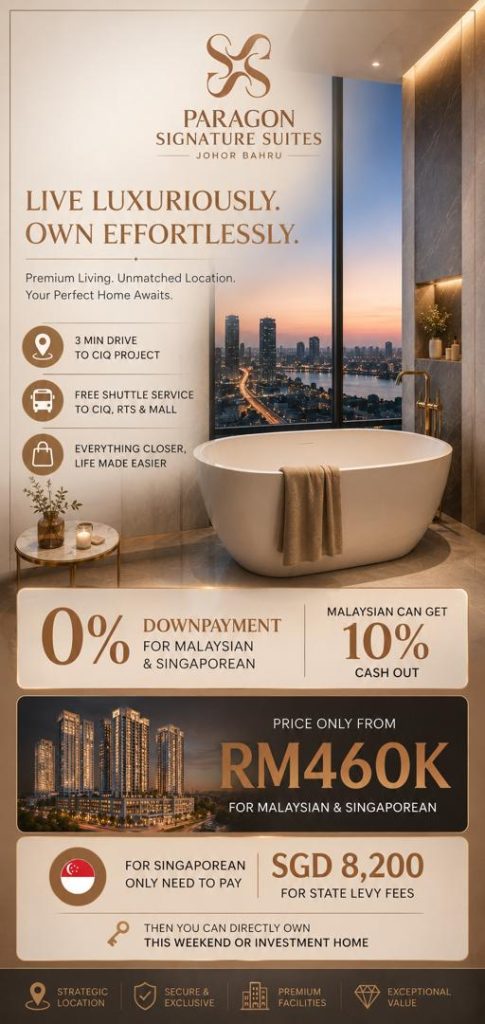
At Paragon Signature Suites JB, the Aurum Stay program is structured around this collective approach. Owners may participate in a managed short-term-rental revenue pool, with 80% of net profit allocated to owners and 20% to management. Shared operating costs for cleaning, maintenance, and utilities are allocated transparently at 15%, while monthly statements give owners a clearer view of performance.
No revenue pool removes market risk. Travel patterns change, new supply enters the market, and pricing must respond to seasonality and local events. Buyers should ask how occupancy is measured, which costs are deducted before profit sharing, how owner-use dates are handled, and where units are marketed. Distribution across major travel-booking channels can widen exposure, but the quality of the listing, response time, and guest reviews still determine whether that exposure becomes revenue.
Questions to Ask Before You Buy
A smart purchase begins with the operational details that are easy to overlook during a showroom visit. Ask whether the development’s rules clearly permit the intended rental model and whether the management arrangement is optional or mandatory. Confirm the full cost of interior completion, recurring fees, utility responsibilities, and the process for maintenance approvals.
It is also worth understanding your personal-use flexibility. Some buyers want a city home they can enjoy several times a month, while others prefer to maximize availability for guests. Neither approach is better, but they produce different outcomes. A professionally managed program should make this choice clear rather than leaving owners to guess how personal stays affect bookings and returns.
For overseas buyers, communication is another decision point. Monthly reporting, digital booking visibility, a named guest-support team, and a documented process for repairs can make remote ownership feel far more manageable. The right question is not “Can this unit be rented?” It is “Who is responsible for making each stay work, and how will I know it is working?”
Choose the Corridor, Then Choose the Experience
An RTS-connected address can support a strong lifestyle and investment case, especially for buyers who see Johor Bahru as part of a wider Singapore-linked routine. Yet the most compelling purchase is rarely the property with the loudest transit message. It is the one that pairs convenient movement with a suite people want to live in, guests want to return to, and an operating structure owners can understand.
Before making a decision, picture the journey from arrival to departure: the route from CIQ, the welcome at the lobby, the comfort of the suite, the quality of the facilities, and the support available after the keys are handed over. That practical view will tell you more about a property’s staying power than distance alone.
8 Responses