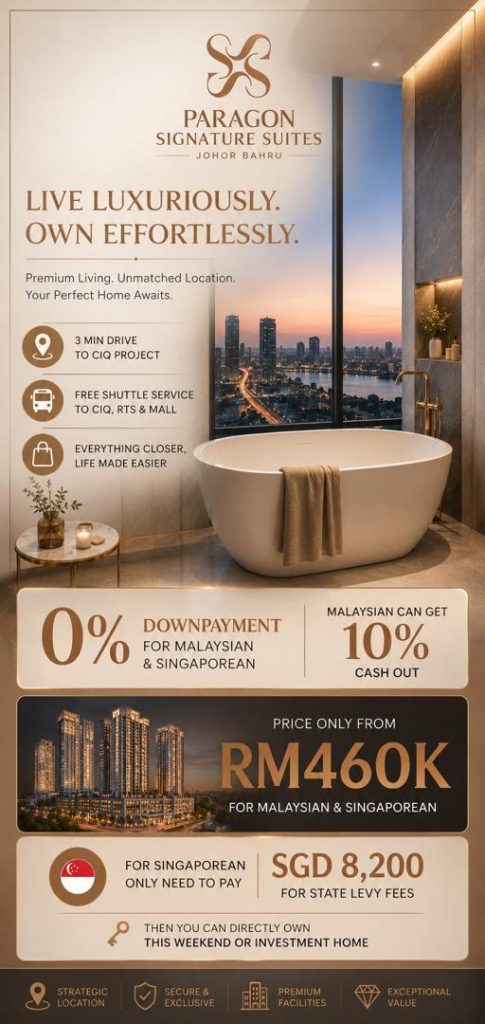
The value of a Johor Bahru address is increasingly measured in minutes, not just square feet. RTS market trends are putting sharper focus on homes that make cross-border routines easier while still offering a credible ownership proposition for buyers who may not occupy the unit every day. For professionals connected to Singapore, first-time investors, and single dwellers, that shift changes what makes a compact residence genuinely attractive.
The RTS corridor is not a reason to buy any property at any price. It is, however, a meaningful force behind buyer attention, tenant demand, and the kind of hospitality-ready living experience that can stand out in a more competitive market.
Why RTS Market Trends Matter to Property Buyers
The RTS Link is expected to improve the connection between Johor Bahru and Singapore, reducing friction for travelers who currently plan their day around road congestion, border queues, and uncertain travel times. That promise has already affected how buyers evaluate location. Interest is moving beyond the familiar question of whether a property is close to the city center and toward a more practical one: how easily can residents and guests reach the CIQ and RTS connection?
This matters because proximity to mobility can support several demand groups at once. A working professional may value a more predictable commute. A Singapore-based buyer may want a convenient weekend base. A visitor may choose a well-managed suite because it offers easy access to shopping, business districts, and transport links. An owner may see a wider pool of potential short-term guests than a conventional long-lease property can attract.
Still, “near the RTS” should not be treated as a complete investment thesis. The actual journey matters. Buyers should consider shuttle availability, travel time during peak periods, walkability, baggage convenience, and the consistency of the wider transport route. A property with a dependable connection can be more useful than one that appears closer on a map but creates a difficult last-mile journey.
The Demand Shift: Convenience With a Clear Use Case
One of the strongest market shifts is toward homes with a defined purpose. Buyers are less persuaded by generic claims of luxury and more focused on how a unit works in daily life and in the rental market. For a one-bedroom suite, that means an efficient layout, a comfortable work-and-rest environment, secure arrival procedures, and facilities that feel relevant to both residents and paying guests.
Compact homes are particularly well positioned when they avoid feeling temporary. A one-bedroom residence of roughly 645 to 649 square feet can offer more flexibility than a conventional studio, provided the interior is planned with care. Separate sleeping and living zones support longer stays, remote work, couples, and individual travelers who want more privacy than a hotel room provides.
This is also where buyer intent matters. A Type B suite designed exclusively for single dwellers may appeal to buyers seeking a focused, manageable home rather than excess space. The right format depends on the owner’s objective. Someone purchasing for personal use may prioritize storage, finishes, and a quieter floor plan. Someone purchasing for rental income may place greater weight on guest appeal, booking performance, and ease of upkeep.
Cross-Border Buyers Want Less Friction
For Singapore-connected buyers, ownership in Johor Bahru is often about optionality. The unit may serve as a personal retreat, a base for business travel, a place for family visits, or an income-producing asset when the owner is away. That flexibility is valuable, but only when the operating model is credible.
A partially furnished unit reduces the first step, yet furnishing alone does not create a guest-ready property. Professional styling, quality linens, reliable internet, housekeeping, responsive guest support, and smooth check-in all shape reviews and repeat demand. As RTS-related travel interest grows, properties that can deliver a consistent stay may have an advantage over units that are simply listed online.
Short-Term Rental Is Becoming More Professional
Another important RTS market trend is the growing divide between self-managed listings and professionally operated hospitality residences. Short-term rental income can look attractive in a headline projection, but the work behind it is substantial. Pricing must adjust to demand. Guests need timely responses. Cleaning must meet a consistent standard. Maintenance issues cannot wait until an owner is free.
For many investors, the appeal is not merely access to Airbnb or online travel agencies. It is access to a managed system that handles distribution, reservations, guest communication, housekeeping, maintenance, and reporting. This can be especially relevant for overseas owners who want visibility without taking on the role of a full-time host.
A collective revenue approach can also change the risk profile. Rather than relying entirely on one unit’s individual booking pattern, owners may participate in a shared operating model. The details deserve close review: how net profit is calculated, which costs are shared, how occupancy is reported, and whether owner-use dates affect participation. Transparency is more valuable than an aggressive income claim.
At Paragon Signature Suites JB, the Aurum Stay program reflects this hospitality-led approach, combining furnishing and guest operations with a collective short-term-rental revenue pool. Owners receive 80% of net profit while management receives 20%, with shared operating costs allocated at 15% for cleaning, maintenance, and utilities. That structure will not suit every buyer, but it addresses a central concern for hands-off investors: who is responsible for making the unit perform after the keys are handed over?
What Buyers Should Assess Before Paying an RTS Premium
RTS connectivity can influence market value, but buyers should separate durable fundamentals from promotional excitement. A higher price may be reasonable when a project combines access, quality management, usable design, and a clear target market. It may be harder to justify when the only selling point is a broad claim of future connectivity.
Start with the practical route to the transport network. Ask how residents and guests will get to the RTS and CIQ, how frequently any shuttle operates, and whether the route also serves major retail or lifestyle destinations. A connection to KSL or Mid Valley, for example, can widen the property’s appeal beyond commuters alone.
Then examine the residence as a product. A compact unit should not compromise on essentials such as security, arrival experience, lift access, ventilation, storage, and sensible furniture placement. Facilities matter, but relevance matters more. Dual-level amenities can support a stronger guest experience when they are well maintained and designed for real use rather than brochure appeal.
Sustainability is becoming part of this equation as well. Green-certified projects can appeal to buyers who value lower-impact living and thoughtful building standards. The investment case should still be grounded in operating costs, management quality, and market demand, but sustainable design can strengthen a project’s long-term positioning.
The Trade-Offs Behind Future Demand
The RTS story is compelling, yet no transport project removes normal property-market risk. More attention around the corridor may bring more supply, especially in the compact condominium segment. A buyer should not assume every one-bedroom unit will achieve the same occupancy, nightly rate, or resale interest.
Short-term rental performance also moves with seasonality, economic conditions, competition, building rules, and guest expectations. A property that performs well for weekend travelers may need a different strategy to attract midweek business stays. An owner who wants frequent personal use may receive less rental income than one who leaves more dates open. These are not flaws in the model. They are choices that should be priced into the decision from the start.
The most resilient purchase is usually one with more than one reason to exist. It should work as a personal residence, appeal to a defined renter or guest audience, and benefit from access to the Johor Bahru-Singapore corridor without depending entirely on a single infrastructure narrative.
A Better Question Than “Will Prices Rise?”
Instead of asking whether RTS proximity guarantees appreciation, ask whether the property will remain useful as travel habits evolve. Can a professional arrive after work and settle in comfortably? Can an overseas owner trust the team handling a guest turnover? Can a visitor understand the arrival process without confusion? Can the home compete on experience, not just location?
Those questions lead to a more disciplined purchase decision. They place transport connectivity in its proper role: a powerful demand driver that works best when paired with a well-designed suite, reliable operations, and a clear ownership plan.
For buyers considering the corridor, the practical next step is simple: test the journey, inspect the operating details, and choose a residence that feels as compelling on an ordinary weekday as it does in an investment presentation.