
A compact residence can be a smart first property, but only when the layout, location, and ownership model work as hard as the buyer does. A one bedroom condo Johor Bahru can serve as a refined city base for a working professional, a practical cross-border stay, or a hospitality-led asset for an owner who prefers income potential without daily operational work.
The difference is in the details. Square footage alone does not define value. Buyers should look at livability, arrival experience, building management, short-term rental rules, connectivity, and the actual process behind rental distribution and owner reporting. For buyers connected to Singapore, those decisions matter even more because convenience at the CIQ and future RTS corridor can shape both personal use and guest demand.
What Makes a One Bedroom Condo Johor Bahru Worth Buying?
A one-bedroom unit is often the most manageable point of entry into urban property ownership. It generally requires less furnishing, lower ongoing upkeep, and a more focused investment decision than a larger home. Yet compact should not mean compromised. The best formats give a resident a genuine separation between resting, living, dining, and working zones.
At approximately 645 to 649 square feet, a well-planned one-bedroom suite has room to feel composed rather than temporary. That is especially valuable for single dwellers, professionals who work remotely, and owners who expect guests to stay for more than a weekend. A separate bedroom offers privacy, while a usable living area supports daily routines that a studio can struggle to accommodate.
The trade-off is straightforward. A one-bedroom residence may not suit a growing family or buyers who regularly host large groups. But for one or two occupants, it can be the more efficient choice: enough space for comfort, without paying for unused rooms or carrying the maintenance demands of a larger unit.
Buy for your lifestyle first
If the unit will be your own home, assess it as a home before assessing it as an investment. Consider how the kitchen functions, whether there is practical storage, how natural light reaches the living area, and whether the bedroom allows for a proper bed and wardrobe arrangement.
Partially furnished suites can reduce the effort between purchase and move-in, but buyers should still review the furnishing specification carefully. Quality finishes, durable surfaces, air-conditioning provision, and thoughtful lighting affect day-to-day satisfaction. They also affect how well the residence presents when it is offered for short-term stays later on.
A hotel-style condo adds another layer of value for owners who travel often. A 24-hour front desk, orderly common areas, and a polished guest arrival experience can make a return home feel more effortless. For investors, those same details help a property compete in a crowded accommodation market.
Connectivity Is Part of the Investment Case
Johor Bahru is not one market. A residence near everyday conveniences may suit a local owner, while a unit with accessible connections to KSL, Mid Valley, CIQ, and the RTS corridor can be more compelling for cross-border professionals and short-stay visitors.
For Singapore-connected buyers, easy movement is often more valuable than being close to a single landmark. Shuttle connectivity can reduce the friction of getting to retail, transport, and border crossings without relying on a private vehicle for every trip. That convenience supports an owner’s lifestyle, but it can also make the property easier to position to guests who want a practical city stay.
Location should still be judged realistically. A shuttle schedule, travel time during peak periods, and the route to key destinations all deserve attention. Do not buy based solely on a map pin. Visit the area at the times you expect to use it, and consider the experience from lobby to destination, not just the distance on a screen.
Short-Term Rental Potential Needs an Operating Model
Airbnb-friendly ownership is attractive, but permission alone does not create income. A successful short-term rental requires professional photography, interior styling, listing management, guest communication, pricing, cleaning coordination, maintenance response, and distribution across booking channels. Without these elements, an owner may own a promising suite but still face an empty calendar or inconsistent reviews.
This is where a managed hospitality program can change the experience. Rather than treating the unit as a passive listing, a capable operator treats it as part of a collective guest offering. The residence is furnished and styled for its target market, reservations are managed, guests receive support, and housekeeping standards are maintained between stays.
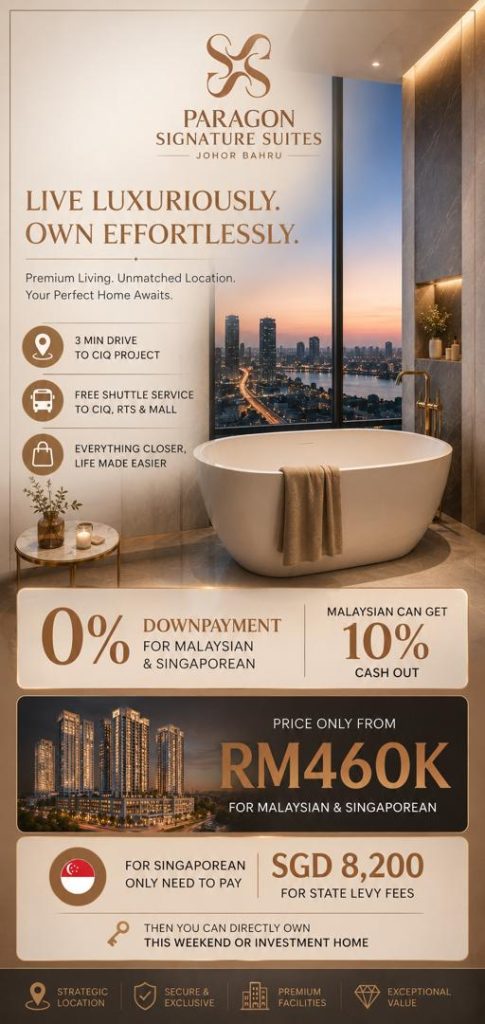
Paragon Signature Suites JB extends this approach through its Aurum Stay program, which combines furnishing, interior design, guest support, maintenance, housekeeping, listing distribution, and booking management. For an owner who does not want to answer late-night guest questions or coordinate cleaners from another country, that structure can be more valuable than self-managing for a slightly higher theoretical return.
Understand the numbers before you commit
Managed rental programs should be clear about how revenue moves from bookings to owners. Gross booking revenue is not the same as net profit. Cleaning, utilities, maintenance, platform costs, furnishing, and operational management can all affect the amount an owner receives.
A transparent framework gives buyers a better basis for comparison. In a collective revenue pool model, owners may receive 80% of net profit while management receives 20%, with shared operating costs allocated at 15% for cleaning, maintenance, and utilities. The exact outcome will still depend on occupancy, nightly rates, seasonality, unit availability, market supply, and guest reviews.
That is why projected returns should be treated as scenarios, not promises. Ask how revenue is reported, how owner stays affect rental availability, how repairs are approved, and whether monthly statements show bookings, expenses, and net distributions in a way that is easy to follow. Good management is not just hospitality. It is operational transparency.
Choose the Right Unit Format for Your Plan
Not every one-bedroom buyer wants the same outcome. A buyer seeking a personal residence may prioritize a quieter orientation, a preferred floor, and a layout that suits a work-from-home routine. An investor may focus more on interior consistency, guest appeal, and a format that can be efficiently maintained.
Dedicated single-dweller formats deserve a closer look for buyers who value privacy and simplicity. A limited collection of one-bedroom units positioned specifically for single occupants can create a more aligned living environment than a development designed around larger households. For a first-time buyer or an individual professional, this can feel more intentional than simply choosing the smallest available unit.
Facilities also influence whether a compact unit feels complete. Dual-level lifestyle spaces can expand the way residents use the development, providing places to exercise, relax, meet friends, or work outside the suite. The strongest amenity mix does not need to be excessive. It needs to be well maintained, visually appealing, and relevant to the people most likely to live in or book the property.
Sustainable Features Add Long-Term Relevance
Sustainability is increasingly part of how buyers assess residential quality, especially among younger professionals and internationally minded investors. GreenRE-certified living signals an effort to build with greater environmental consideration, which can support a development’s long-term appeal.
It should not be the only reason to buy. Certification does not replace good management, a practical layout, or a connected location. Still, energy-conscious design and a more responsible development approach can be meaningful differentiators as buyers and guests become more selective about the homes and accommodations they choose.
Questions to Ask Before Reserving a Suite
Before making a decision, ask for the complete unit specification, furnishing scope, estimated recurring charges, and a clear explanation of rental participation. Confirm whether short-term rental participation is optional, how owner-use dates are handled, and what happens if you later decide to occupy the suite full time.
You should also ask how the property will be marketed, which booking platforms will be used, and how guest standards are protected. Distribution across channels such as Airbnb, Booking.com, Agoda, Trip.com, Traveloka, Tiket.com, and social platforms can broaden visibility, but consistent listings and fast guest support matter just as much as the number of channels.
Finally, view the property through both lenses: as the place you would be happy to stay and as the experience a paying guest would be pleased to book. When a one-bedroom suite delivers on both, it becomes more than a compact address. It becomes a flexible asset built for modern city living.
The right purchase is not necessarily the largest unit or the most aggressive rental projection. It is the one that gives you a credible personal-use plan, a well-managed path to hospitality income if you want it, and the confidence that every square foot has a purpose.
One Response