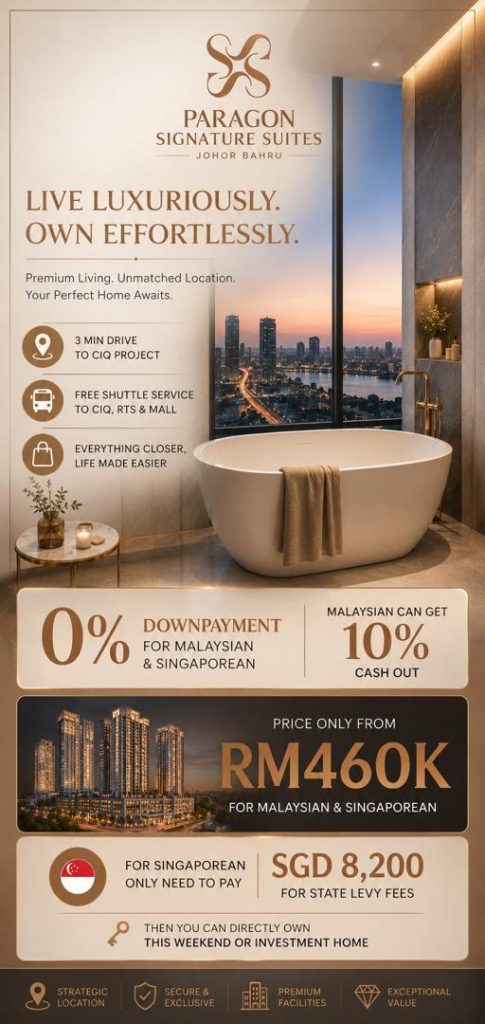
A beautiful one-bedroom suite can attract guests. Running it well, week after week, is another matter. When weighing pooled rentals versus individual bookings, the real decision is not simply about how income is collected. It is about whether you want to operate a hospitality business yourself or participate in one with professional systems, shared demand, and a defined revenue model.
For investors buying a compact residence in Johor Bahru, especially those balancing work, cross-border travel, or a home base in Singapore, that distinction can shape both cash flow and peace of mind. Neither model is automatically superior. The better choice depends on your time, pricing confidence, appetite for variable results, and expectations for personal use.
What pooled rentals actually mean
A pooled rental program combines participating units into a collective short-term rental inventory. Rather than each owner earning only from the nights their exact suite is reserved, revenue is gathered and distributed according to the program’s stated formula.
The practical advantage is consistency of operations. Guests book a suite category or available unit, while one hospitality team manages listing distribution, reservations, check-in, housekeeping, guest questions, maintenance coordination, and service standards. The property can present itself more like a hotel-style residence than a collection of separately managed apartments.
This model is particularly useful when units are similar in size, furnishing level, and guest appeal. At Paragon Signature Suites JB, the Aurum Stay concept is designed around this collective approach, pairing unit styling and operational support with a transparent profit-sharing framework. Participating owners receive 80% of net profit, while management receives 20%. Shared operating costs for cleaning, maintenance, and utilities are allocated at 15% under the program structure.
The key point is that a pool does not remove market risk. Demand can still rise and fall with holidays, business travel, local events, and broader economic conditions. It changes how that risk is experienced. Instead of one owner carrying the full impact of a slow month for one unit, participating owners share the performance of the managed inventory.
Individual bookings offer control, with more responsibility
With individual bookings, your unit stands on its own. You decide where to list it, how to photograph and furnish it, what nightly rate to set, when to block dates, and which guest requests to accept. If your suite earns an excellent review profile and holds a high-demand calendar, you retain the direct benefit of that performance.
That freedom appeals to owners who enjoy hospitality and understand online travel platforms. A hands-on owner may adjust prices for weekends, school breaks, concerts, exhibitions, and Singapore-bound travel patterns. They can refresh the interior, test a longer minimum stay, or offer packages that make their listing distinct.
The trade-off is operational exposure. A late-night lock issue, a last-minute cancellation, a guest complaint about air conditioning, or a same-day turnover all need a fast response. Even when an owner hires separate cleaners or a co-host, they must coordinate suppliers, monitor quality, review payouts, and protect the unit’s ratings.
Individual bookings can also produce uneven results. One suite may be occupied heavily because it is priced well and photographed professionally, while another nearby remains vacant because its listing has weak visibility. That upside-and-downside gap is central to the choice.
Pooled rentals versus individual bookings: the income question
Investors often ask which model makes more money. A more useful question is: how predictable do you need the income experience to be?
An individual unit may outperform a pool during peak periods if it has superior design, stronger reviews, better pricing, or an owner willing to manage it actively. It may also command a higher rate when it offers a distinctive view, larger layout, or premium furnishing package. The owner receives the reward for creating that advantage.
Yet individual performance can be volatile. Vacancy between reservations, unexpected repairs, discounted last-minute nights, platform fees, and cleaner availability can affect the final figure. Gross booking revenue is not the same as profit. An owner needs to account for every operating expense before judging success.
A pool is usually better viewed as a shared operating model rather than a promised return. Its value lies in a larger booking base, standardized guest experience, professional distribution, and more even exposure to occupancy across comparable participating units. It may suit an owner who would rather receive monthly statements and a calculated share than manage daily booking decisions.
Before joining any program, ask how net profit is defined. Clarify which expenses are deducted, how the revenue allocation is calculated, whether all unit types participate on equal terms, and how statements show occupancy, average daily rate, platform costs, cleaning, utilities, and maintenance. Transparent reporting matters more than an attractive headline number.
Your time is part of the investment calculation
A short-term rental can look passive from a distance. It is not passive when the owner is responsible for guest messages, access instructions, linen replacement, damage claims, listing updates, and pricing.
Individual bookings work best when you have either the time to supervise the operation or a trusted team with clear service standards. They can also work for owners who want complete calendar flexibility, perhaps because they plan frequent personal stays or want to reserve particular weekends without considering a collective inventory.
Pooled rentals favor the owner who wants the asset to be professionally operated. This is especially relevant for buyers who live across the border, travel regularly, or are purchasing their first investment property. A 24-hour front desk, organized arrivals, housekeeping oversight, and centralized guest support can protect the experience that online guests expect.
That convenience has a cost: less day-to-day control. You may not choose every guest, set every rate, or decide exactly when your specific suite is occupied. For many owners, that is the point. For others, it will feel restrictive.
Personal stays and unit identity deserve attention
Owners should not overlook lifestyle use. A signature suite can be both an income-producing asset and a private city retreat, but the rental structure determines how easily those roles coexist.
Under an individual model, blocking dates is straightforward. You simply close your calendar. The cost is lost booking opportunity for those dates. Under a pooled program, owner stays may be subject to notice periods, blackout dates, or allocation rules so the operating team can protect confirmed guest reservations and overall occupancy. Some managed programs offer complimentary owner stays, but the terms should be understood before purchase rather than assumed afterward.
Unit identity matters as well. If you have invested in highly personalized interiors, premium appliances, or a particular design story, independent operation allows you to market those details directly. A standardized pool typically benefits from cohesive furnishing and service standards because guests should receive a reliable experience regardless of which unit is assigned.
Questions to ask before choosing either model
The strongest investment decisions come from operational detail, not optimistic occupancy assumptions. Ask whether the property is expressly suitable for short-term stays and whether its management framework supports that use. Then examine the commercial mechanics.
For a pooled program, request the revenue-sharing agreement, sample monthly statement, cost allocation, owner-use rules, furnishing requirements, and procedure for maintenance or damage. Find out how the operator markets across platforms, responds to reviews, handles guest disputes, and measures service quality. A professional operation should be comfortable explaining these items clearly.
For individual bookings, estimate the full cost of independence. Include furnishing, photography, listing management, platform commissions, cleaning, linen, utilities, repairs, insurance, smart access, guest support, and the value of your own time. If you plan to appoint a co-host, compare their fee structure with the service scope of a managed pool.
Also consider your exit preferences. A unit that is maintained to hotel-style standards and supported by documented operations may appeal to a future investor. On the other hand, an independently operated suite with an established listing history and strong reviews can also be valuable, provided the records are clear and the operation is transferable.
Choose the model that matches how you want to own
Pooled rentals are compelling for owners who value professional care, shared performance, and a more hands-off income framework. Individual bookings are compelling for owners who want pricing control, personal calendar freedom, and the chance to outperform through active management.
The best choice is the one you can operate with confidence through both busy and quiet seasons. Review the numbers, read the operating terms, and choose a structure that leaves room for the reason you bought the suite in the first place: a refined place to stay, an asset with purpose, and a hospitality experience guests will want to return to.