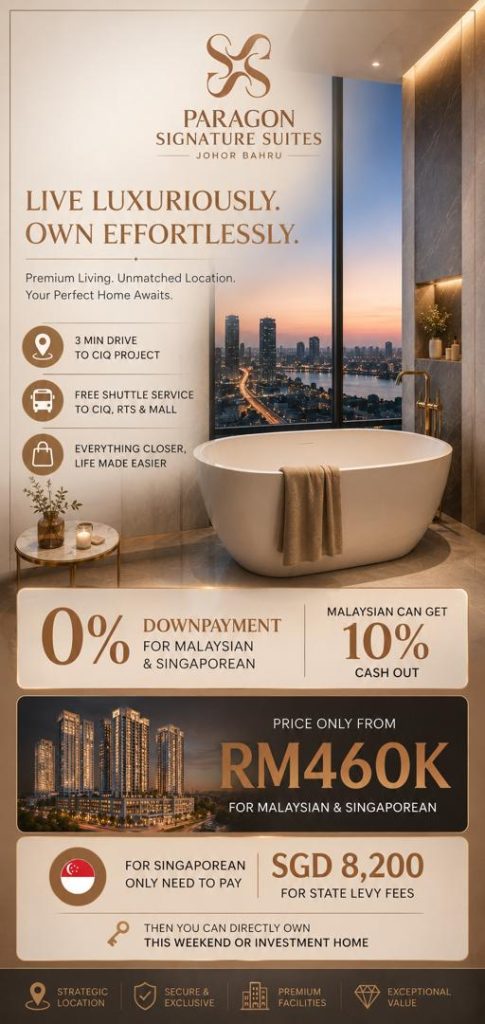
A compact one-bedroom can feel far more valuable than its square footage suggests when the building gives residents room to change pace. That is the advantage of dual level condo facilities: they extend daily life beyond the apartment, creating distinct places to arrive, work, socialize, recharge, and host. For an owner-occupier, that improves the experience of living in the city. For an investor, it can make a short-term rental feel more considered, more memorable, and easier to position.
The idea is simple, but the execution matters. Two facility levels should not mean duplicated spaces with different views. The best developments use each level for a different purpose, so the entire property feels active without making every moment feel busy.
Why Dual Level Condo Facilities Matter
In a single-level facility plan, every activity competes for the same space. Residents arriving after work, guests meeting friends, and people looking for quiet downtime may all be using one shared zone. That can create congestion and reduce the premium feel buyers expect from a modern residential address.
A dual-level arrangement creates a more intentional rhythm. One level can support energy, movement, and social connection, while another offers a more relaxed setting for slower moments. The physical separation matters because it gives residents options. They can choose the setting that fits the day instead of treating the building’s common area as a one-size-fits-all amenity.
This is especially relevant for buyers choosing a manageable one-bedroom residence. A suite of approximately 645 to 649 square feet can be highly efficient, but it does not need to carry every function of a resident’s life. Well-planned shared spaces provide breathing room beyond the front door without requiring the cost and maintenance of a much larger private home.
A better arrival-to-lifestyle experience
The resident and guest experience begins before anyone enters a unit. A professional arrival environment, supported by a 24-hour front desk, sets a hospitality-led standard from the first interaction. For owners who spend time between Singapore and Johor Bahru, that assurance has practical value. For short-stay guests, it reduces friction at check-in and makes the stay feel more like a professionally operated residence than an unmanaged apartment.
Dual-level facilities reinforce that first impression by giving the property more depth. Rather than walking into a building where every amenity is visible at once, residents discover different environments throughout the development. That sense of progression can make a compact urban residence feel more exclusive.
Separation makes shared spaces more usable
The most successful common areas are not simply attractive in photographs. They are useful on a Tuesday evening, a weekend morning, and during a busy holiday period. Separating facilities across levels helps protect that usability.
An active zone can accommodate residents who want to meet, move, or spend time outside their suite. A quieter level can be better suited to casual reading, conversation, or simply taking a break from the city. The exact mix of spaces will shape how people use the building, but the principle stays the same: different moods deserve different settings.
For single dwellers, this can be particularly valuable. Type B suites designed exclusively for single occupants offer a focused, low-maintenance home base. Shared lifestyle areas provide an optional extension of that home base, giving residents the freedom to be private without feeling confined.
Dual Level Facilities and Rental Appeal
Investors often focus first on location, purchase price, and nightly rate. Those numbers matter, but guest reviews are frequently shaped by details that are harder to place on a spreadsheet: ease of arrival, the atmosphere of shared spaces, building upkeep, and whether the stay feels thoughtfully managed.
Facilities can influence all of those perceptions. A guest who has a pleasant check-in, finds well-maintained common areas, and has places to spend time beyond the unit is more likely to see a compact suite as a complete stay rather than only a place to sleep. That can support stronger guest satisfaction and encourage better reviews over time.
There is a trade-off, however. Amenities only add investment value when they are operated consistently. A beautiful facility level that is poorly maintained becomes a liability, not a differentiator. Buyers should look beyond renderings and ask how cleaning, repairs, access control, and guest conduct are managed. The quality of operations determines whether facilities continue to support rates and occupancy after the initial launch period.
For Airbnb-friendly ownership, this point is even more relevant. Short-term guests have different expectations from long-term residents. They need clear arrival instructions, reliable support, and common areas that remain presentable across frequent turnover. Owners who prefer a hands-off model should assess whether the management structure is built for hospitality, not only for conventional residential administration.
What Buyers Should Look For Beyond the Brochure
When evaluating dual-level facilities, do not judge the concept by the number of amenity names alone. Consider how the spaces will work in real life and whether the operator can preserve their standard over time.
Ask four practical questions before making a decision:
- Does each facility level have a distinct role, or are spaces duplicated without a clear purpose?
- Are the facilities convenient enough for regular use by residents, not only attractive for marketing photos?
- How are cleaning, maintenance, security, and guest access handled when short-term rentals are permitted?
- Will the service model support both owner stays and guest stays without creating uncertainty for either group?
These questions help separate a feature-rich sales presentation from a property designed for long-term performance. They also help buyers assess ongoing costs realistically. Facilities require utilities, staffing, maintenance, and periodic renewal. A transparent operating approach is generally more valuable than an unusually low estimate that cannot sustain the expected standard.
A Lifestyle Asset Needs Operating Discipline
The strongest condo investments combine a compelling physical product with a clear plan for how it will be used. This is where a hospitality model can add meaningful value. Instead of leaving each owner to coordinate furnishing, listing creation, pricing, guest communication, housekeeping, and repairs alone, managed programs can bring those tasks under one operating framework.
At Paragon Signature Suites JB, the Aurum Stay model is designed around that practical need. Owners can access furnishing and interior design support, guest services, housekeeping, maintenance, distribution, and booking management while participating in a collective short-term-rental revenue pool. The structure allocates 80% of net profit to owners and 20% to management, with shared operating costs clearly allocated at 15% for cleaning, maintenance, and utilities.
That framework does not remove market risk. Rental income still depends on demand, pricing discipline, guest reviews, competing supply, and the broader travel environment. Yet it gives owners a defined operating model rather than an open-ended promise. Detailed monthly statements also make it easier to understand how the asset is performing and where costs are being applied.
For buyers connected to the Singapore-Johor corridor, connectivity adds another dimension. Shuttle access to KSL, Mid Valley, RTS, and CIQ can make the residence more practical for owner visits and more convenient for guests who want to move through the city without relying entirely on private transport. In this setting, facilities, service, and mobility work together. Each one strengthens the usefulness of the others.
The Value Is in How the Building Feels Over Time
A dual-level concept is not valuable simply because it sounds premium. Its real value comes from giving people more ways to use the property well. Residents gain room to reset outside their suite. Guests gain a more complete hotel-style experience. Owners gain an amenity story that can support a stronger market position when paired with attentive operations.
For a buyer choosing between similar compact units, that everyday experience can be the deciding factor. Look for a development where facilities are not treated as decoration, but as part of a considered living and income strategy. The right shared spaces should make every stay feel more purposeful, whether it lasts one night, one year, or becomes part of a long-term portfolio.